
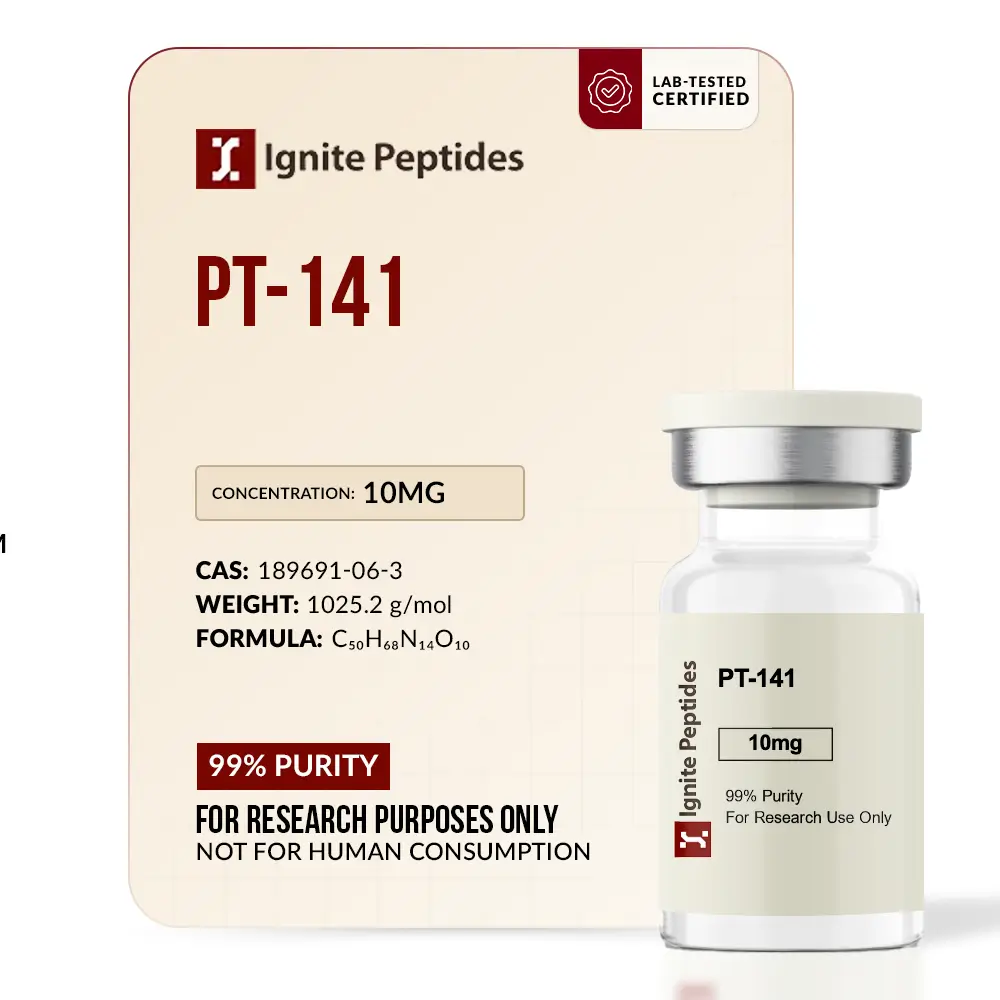
PT-141 (10mg): Research Overview, Peptide Science, and Melanocortin Pathway Education
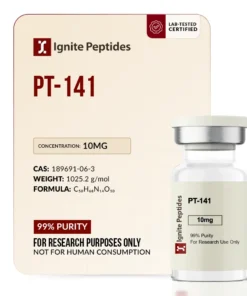
ignitepeptides.store provides educational resources about research peptides, wellness compounds, and emerging areas of peptide science. PT-141 (10mg), also known as Bremelanotide, is a synthetic peptide studied for its interaction with melanocortin receptors. Unlike many peptides that focus on growth hormone release or metabolic regulation, PT-141 has attracted attention because of its unique mechanism involving central nervous system signaling pathways. Therefore, understanding PT-141 (10mg) helps readers explore one of the most researched melanocortin-related peptides available today.
What Is PT-141 (10mg)?
PT-141 is a synthetic melanocortin receptor agonist derived from research involving Melanotan peptides. Scientists developed the compound to investigate how melanocortin signaling influences various physiological processes.
The direct answer is:
PT-141 (10mg) is a melanocortin receptor peptide studied for its effects on neurological signaling and melanocortin pathway activity.
Because it works through receptor signaling rather than hormone replacement pathways, PT-141 remains a unique compound within peptide research.
How Does PT-141 Work?
PT-141 interacts with melanocortin receptors located within the central nervous system. Researchers continue studying how these receptors influence behavioral and physiological responses.
Current research discussions often focus on:
- melanocortin receptor activity
- peptide signaling pathways
- neurological communication
- receptor-specific responses
- central nervous system interactions
- peptide-mediated biological regulation
As scientific knowledge expands, researchers continue investigating additional applications and mechanisms.
Why Is PT-141 Different from Other Peptides?
Many peptides focus on growth hormone release, tissue repair, or metabolic regulation.
PT-141 follows a different pathway.
PT-141 vs Growth Hormone Peptides
Growth hormone peptides such as CJC-1295 and Ipamorelin primarily influence growth hormone signaling.
PT-141 acts through melanocortin receptor pathways.
PT-141 vs Recovery Peptides
Recovery-focused peptides such as BPC-157 and TB-500 are commonly associated with tissue repair research.
PT-141 research focuses on receptor-mediated neurological signaling.
PT-141 vs Metabolic Peptides
Metabolic compounds such as MOTS-c influence energy regulation pathways.
PT-141 targets melanocortin receptor systems instead.
Potential Research Areas for PT-141
Scientific discussions frequently explore PT-141 in relation to:
- melanocortin receptor research
- neurological signaling
- receptor biology
- peptide communication pathways
- behavioral science research
- central nervous system studies
- peptide pharmacology
Because peptide science evolves rapidly, ongoing studies continue to improve understanding of these mechanisms.
Understanding Melanocortin Receptors
Melanocortin receptors participate in several biological signaling networks throughout the body. Researchers investigate these receptors because they influence multiple physiological processes.
As a result, melanocortin-based compounds remain important subjects in modern peptide research.
Readers interested in related peptide education can also explore ignitepeptides.store peptide education resources and ignitepeptides.store research peptide collection.
Why Research Grade Quality Matters
Peptide quality remains important in research environments. Purity testing, manufacturing standards, and storage practices contribute to consistency and reliability.
Therefore, researchers often prioritize suppliers that maintain transparent quality control standards.
For additional peptide education and product information, visit ignitepeptides.store learning center.
Scientific and Educational Resources
High-authority references:
These sources provide additional information regarding peptide pharmacology, receptor biology, and melanocortin research.
Frequently Asked Questions
What is PT-141 (10mg)?
PT-141 is a synthetic melanocortin receptor peptide studied in neurological and receptor signaling research.
Is PT-141 the same as Bremelanotide?
Yes. PT-141 is commonly known as Bremelanotide in scientific literature.
How does PT-141 work?
PT-141 interacts with melanocortin receptors involved in neurological signaling pathways.
Is PT-141 a growth hormone peptide?
No. PT-141 acts through melanocortin receptor pathways rather than growth hormone pathways.
Why is PT-141 researched?
Researchers study PT-141 to better understand melanocortin receptor activity and peptide signaling mechanisms.
Reviews
There are no reviews yet.