
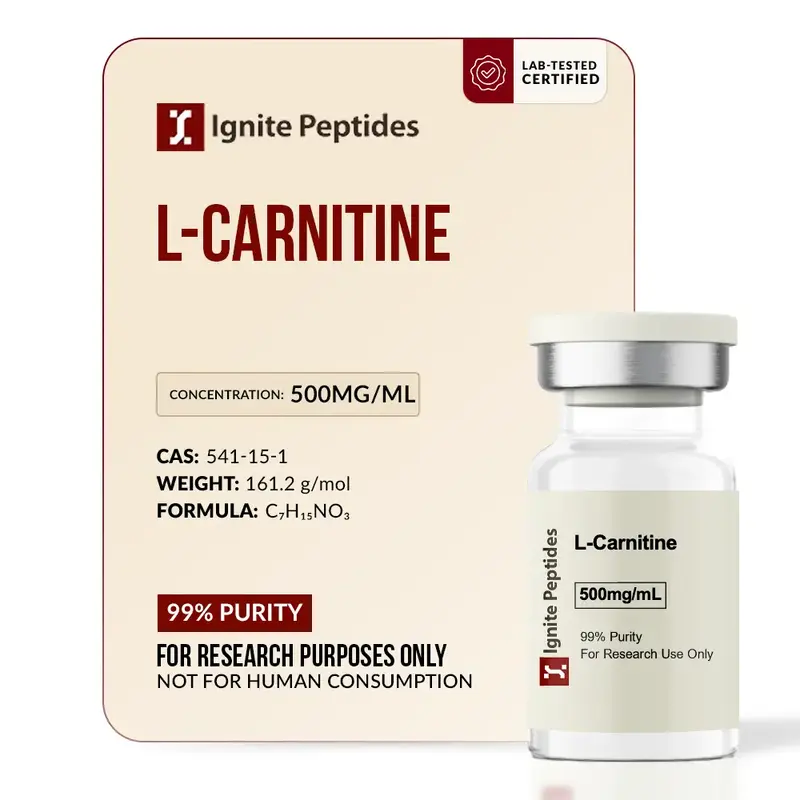
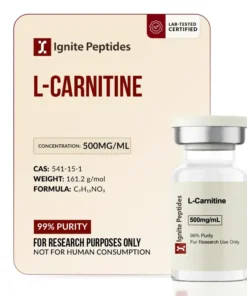
L-Carnitine 500mg/mL 10mL: Energy Metabolism Research, Fatty Acid Transport, and Performance Science
ignitepeptides.store Home provides educational resources focused on peptide science, metabolic wellness, and performance-related research compounds. L-Carnitine 500mg/mL 10mL is a widely studied amino acid derivative associated with energy metabolism, fatty acid transport, and cellular energy production. Researchers continue exploring L-Carnitine because it plays an important role in how the body utilizes fatty acids for energy. Therefore, understanding L-Carnitine 500mg/mL 10mL helps readers explore one of the most recognized compounds in metabolic and performance research.
What Is L-Carnitine 500mg/mL 10mL?
L-Carnitine is a naturally occurring compound synthesized from the amino acids lysine and methionine. It helps transport long-chain fatty acids into mitochondria, where they can be utilized in cellular energy production processes.
Quick Answer:
L-Carnitine 500mg/mL 10mL is a metabolic research compound studied for fatty acid transport, cellular energy production, exercise performance, and mitochondrial function.
Because cellular energy production influences many physiological systems, L-Carnitine remains an important subject within metabolic science.
How Does L-Carnitine Work?
Researchers continue studying how L-Carnitine supports the movement of fatty acids into mitochondria, the energy-producing structures found within cells.
Scientific discussions frequently focus on:
- fatty acid transport
- mitochondrial function
- cellular energy production
- metabolic performance
- exercise science
- energy metabolism pathways
Consequently, L-Carnitine continues attracting significant attention in sports nutrition and metabolic research.
Why Is L-Carnitine Different from Peptides?
Unlike peptide compounds, L-Carnitine is an amino acid derivative involved in metabolic energy production.
L-Carnitine vs MOTS-C
MOTS-C is a mitochondrial peptide researched for metabolic signaling.
L-Carnitine supports fatty acid transport and cellular energy utilization.
L-Carnitine vs GLP-1 Peptides
GLP-1 compounds focus on metabolic signaling and glucose regulation.
L-Carnitine focuses on fatty acid metabolism and mitochondrial energy production.
L-Carnitine vs Growth Hormone Peptides
Growth hormone peptides such as CJC-1295 and Ipamorelin focus on endocrine pathways.
L-Carnitine supports energy metabolism research.
Potential Research Areas for L-Carnitine 500mg/mL 10mL
Researchers frequently investigate L-Carnitine in relation to:
Energy Metabolism Research
Scientists study how cells convert nutrients into usable energy.
Mitochondrial Function
Understanding mitochondrial performance remains a major scientific objective.
Exercise Science
Researchers continue evaluating pathways associated with physical performance and energy utilization.
Fatty Acid Transport Studies
L-Carnitine plays a central role in transporting fatty acids into mitochondria.
Metabolic Wellness Research
Scientists investigate how metabolic pathways contribute to overall physiological function.
Why Energy Metabolism Research Matters
Energy production affects virtually every biological process. Therefore, understanding how compounds such as L-Carnitine participate in metabolic pathways helps researchers better evaluate cellular function and performance science.
Readers interested in related products can also explore ignitepeptides.store Wellness Collection and ignitepeptides.store Educational Resources for additional educational content.
Why Research Grade Quality Matters
Purity standards, manufacturing consistency, and proper storage practices contribute significantly to research reliability. Therefore, sourcing research compounds from reputable suppliers remains important.
For additional information and educational resources, visit ignitepeptides.store Research Products Collection.
Scientific and Educational Resources
For further information about metabolism and mitochondrial biology:
Frequently Asked Questions
What is L-Carnitine 500mg/mL 10mL?
L-Carnitine 500mg/mL 10mL is a metabolic research compound studied for fatty acid transport, mitochondrial function, and cellular energy production.
How does L-Carnitine work?
L-Carnitine helps transport long-chain fatty acids into mitochondria, where energy production processes occur.
Is L-Carnitine a peptide?
No. L-Carnitine is an amino acid derivative rather than a peptide compound.
Why is L-Carnitine researched?
Researchers investigate L-Carnitine because of its role in energy metabolism, exercise science, and mitochondrial biology.
What makes L-Carnitine important?
L-Carnitine contributes to fatty acid utilization and cellular energy production, making it an important component of metabolic research.

Reviews
There are no reviews yet.