
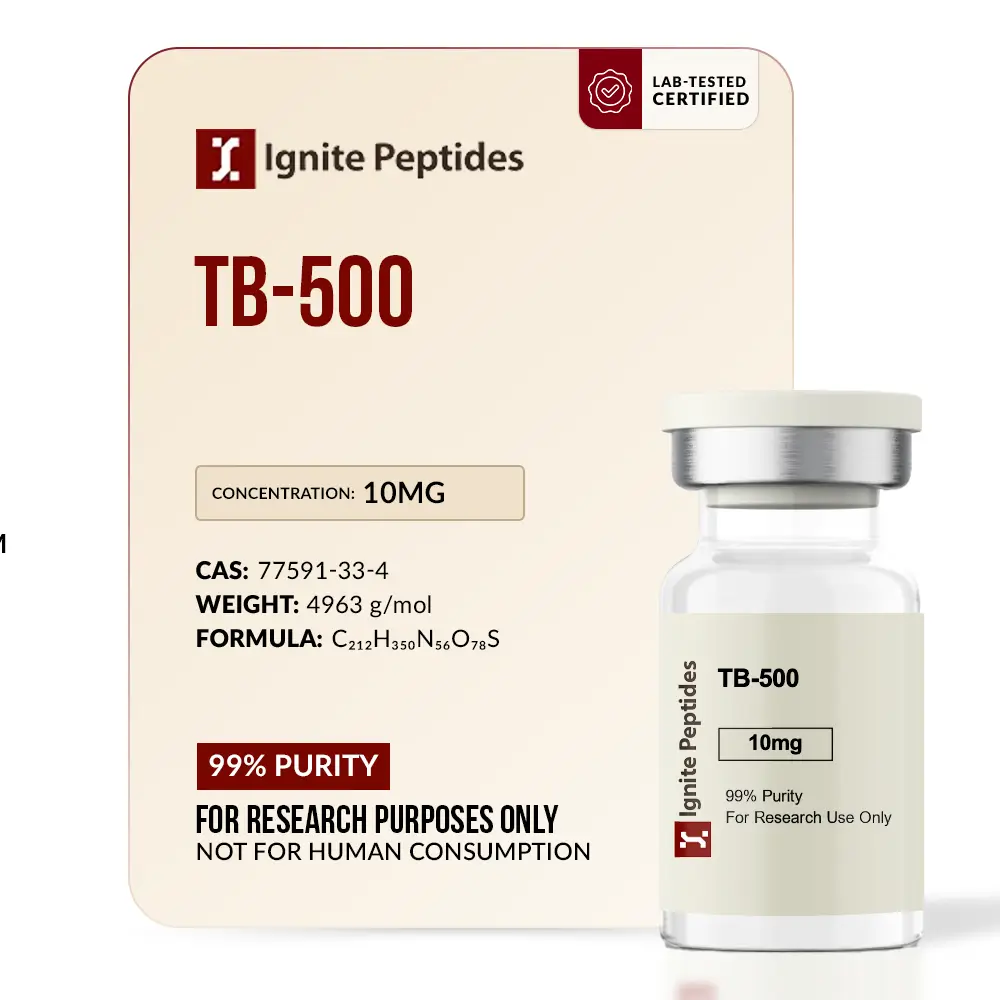
TB-500 (Thymosin Beta-4) 10mg: Recovery Peptide Research, Cellular Migration Science, and Regenerative Biology
ignitepeptides.store Home provides educational resources focused on peptide science, recovery research, and regenerative biology. TB-500 (Thymosin Beta-4) 10mg is one of the most recognized peptides in tissue-support and recovery-related research. Scientists continue investigating TB-500 because of its relationship with cellular migration, tissue maintenance pathways, and regenerative processes. Therefore, understanding TB-500 10mg helps readers explore a significant area of modern peptide science.
What Is TB-500 (Thymosin Beta-4) 10mg?
TB-500 is a synthetic version of a naturally occurring peptide known as Thymosin Beta-4. Researchers study this peptide because it participates in biological processes associated with cellular movement and tissue-related signaling.
Quick Answer:
TB-500 (Thymosin Beta-4) 10mg is a research peptide studied for cellular migration, tissue-support pathways, regenerative biology, and recovery science.
Because regenerative research continues expanding, TB-500 remains one of the most discussed peptides within recovery-focused studies.
How Does TB-500 Work?
Researchers continue evaluating how TB-500 interacts with biological pathways associated with cellular communication and movement.
Scientific discussions frequently focus on:
- cellular migration research
- tissue-support pathways
- regenerative biology
- recovery science
- peptide signaling mechanisms
- cellular maintenance studies
Consequently, TB-500 attracts attention across multiple fields of peptide research.
Why Is TB-500 Different from Other Peptides?
Many peptides target endocrine signaling, metabolism, or neurological pathways.
TB-500 primarily focuses on regenerative and tissue-related biological processes.
TB-500 vs BPC-157
BPC-157 is frequently researched for tissue-support pathways and recovery science.
TB-500 is often associated with cellular migration and regenerative biology.
TB-500 vs Growth Hormone Peptides
Growth hormone peptides such as Sermorelin, Ipamorelin, and CJC-1295 focus on endocrine signaling.
TB-500 focuses on recovery-related biological pathways.
TB-500 vs GHK-Cu
GHK-Cu is commonly researched for skin wellness and cellular renewal.
TB-500 focuses more heavily on regenerative and tissue-support science.
Potential Research Areas for TB-500 10mg
Researchers frequently investigate TB-500 in relation to:
Regenerative Biology
Scientists continue studying pathways involved in biological repair and adaptation.
Tissue-Support Research
Researchers evaluate communication systems associated with tissue maintenance.
Cellular Migration Studies
Understanding how cells move and respond remains a major scientific objective.
Recovery Science
TB-500 remains a popular subject within recovery-focused peptide research.
Peptide Biology
Researchers continue exploring how TB-500 contributes to broader peptide signaling pathways.
Why Regenerative Research Matters
Regenerative biology helps researchers understand how tissues maintain function and respond to biological demands. Therefore, studying peptides such as TB-500 contributes valuable insight into complex cellular communication systems.
Readers interested in related compounds can also explore ignitepeptides.store Recovery Peptides Collection and ignitepeptides.store Educational Resources for additional educational content.
Why Research Grade Quality Matters
Purity standards, manufacturing consistency, and proper storage practices contribute significantly to research reliability. Therefore, sourcing peptides from reputable suppliers remains important.
For additional peptide information and educational resources, visit GradeOnePeptides Research Products Collection.
Scientific and Educational Resources
For further information about regenerative science and peptide biology:
- National Institutes of Health (NIH)
- PubMed Research Database
- National Center for Biotechnology Information (NCBI)
Frequently Asked Questions
What is TB-500 10mg?
TB-500 10mg is a research peptide studied for cellular migration, tissue-support pathways, and regenerative biology.
What does TB-500 stand for?
TB-500 is the synthetic form of the naturally occurring peptide Thymosin Beta-4.
Why is TB-500 researched?
Researchers investigate TB-500 because of its relationship with cellular movement, regenerative biology, and recovery science.
Is TB-500 the same as BPC-157?
No. Although both are often discussed within recovery research, they interact with different biological pathways.
Why is regenerative biology important?
Scientists study regenerative biology to better understand tissue maintenance, cellular communication, and biological adaptation.

Reviews
There are no reviews yet.