
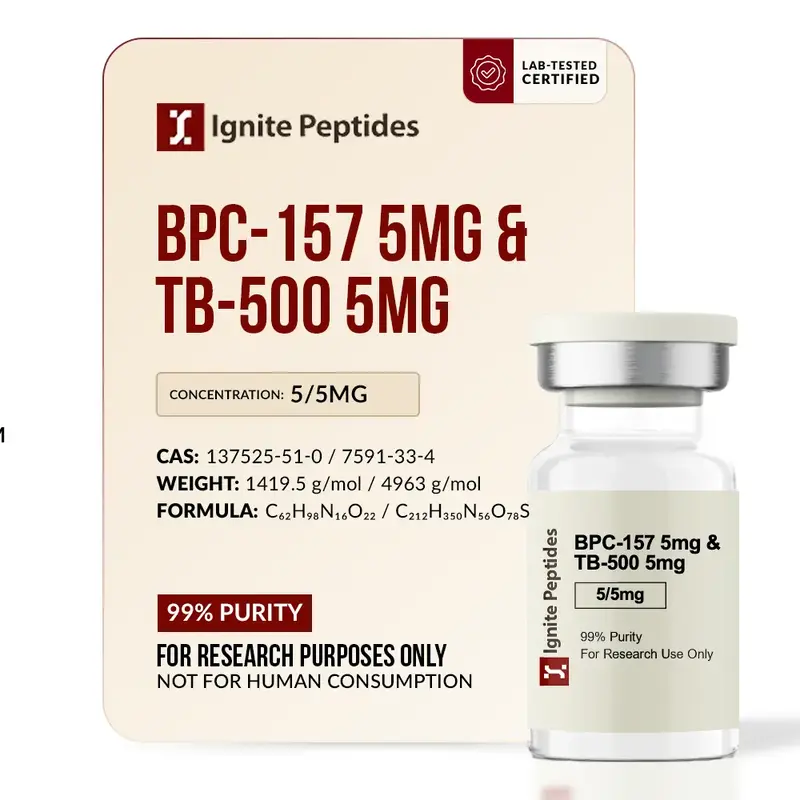
BPC-157 5mg & TB-500 5mg: Recovery Peptide Blend, Tissue Support Research, and Regenerative Science
ignitepeptides.store Home provides educational resources covering peptide science, recovery-focused compounds, and regenerative research. BPC-157 5mg & TB-500 5mg is one of the most researched peptide combinations in recovery and tissue-support studies because it combines two well-known peptides that are frequently investigated for their complementary biological pathways. As peptide science continues to expand, researchers often explore this blend to better understand tissue maintenance, cellular communication, and regenerative processes. Therefore, understanding BPC-157 5mg & TB-500 5mg helps readers explore one of the most discussed recovery-focused peptide combinations available today.
What Is BPC-157 5mg & TB-500 5mg?
BPC-157 and TB-500 are two distinct peptides commonly combined into a single research blend. BPC-157 originates from a protective protein sequence associated with gastric peptides, while TB-500 is a synthetic version of Thymosin Beta-4, a naturally occurring protein involved in cellular movement and tissue-related processes.
Direct Answer:
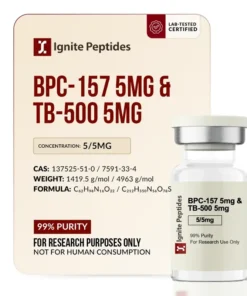
BPC-157 5mg & TB-500 5mg is a research peptide blend studied for tissue support, recovery science, regenerative biology, and cellular communication pathways.
Because each peptide works through different biological mechanisms, researchers frequently evaluate them together.
How Does BPC-157 & TB-500 Work?
Researchers continue studying how these peptides influence biological pathways associated with tissue maintenance and recovery.
Scientific discussions commonly focus on:
- tissue-support mechanisms
- regenerative biology
- cellular communication
- connective tissue research
- recovery science
- cellular migration pathways
Consequently, this peptide blend remains a significant topic in regenerative research.
Why Combine BPC-157 and TB-500?
Researchers often study peptide combinations because different compounds may influence complementary pathways.
BPC-157
BPC-157 is commonly associated with localized tissue-support research and cellular communication studies.
TB-500
TB-500 is frequently studied for its relationship with cellular migration and broader tissue-support mechanisms.
Combined Research Interest
Researchers evaluate the blend because it combines two distinct approaches to regenerative peptide science.
BPC-157 & TB-500 vs Other Peptide Categories
BPC-157 & TB-500 vs Growth Hormone Peptides
Growth hormone peptides such as CJC-1295 and Ipamorelin focus on endocrine signaling.
BPC-157 and TB-500 focus primarily on tissue-support and regenerative pathways.
BPC-157 & TB-500 vs Metabolic Peptides
Compounds such as MOTS-c influence mitochondrial and metabolic communication.
This blend focuses on recovery-oriented biological processes.
BPC-157 & TB-500 vs Nootropic Peptides
Nootropic peptides such as Selank and Semax focus on neurological pathways.
BPC-157 and TB-500 focus on tissue-related research.
Potential Research Areas for BPC-157 5mg & TB-500 5mg
Researchers frequently investigate this peptide combination in relation to:
Recovery Science
Scientists study how biological systems adapt to physical stress and recovery demands.
Tissue Support Research
Researchers continue evaluating pathways associated with tissue maintenance.
Connective Tissue Studies
Understanding connective tissue biology remains a significant area of peptide research.
Cellular Communication
Peptides help coordinate signaling between cells throughout the body.
Regenerative Biology
Scientists continue exploring peptide-based approaches to biological adaptation and repair.
Why Recovery Research Matters
Recovery and regenerative science help researchers better understand how tissues maintain function and adapt to physiological demands. Therefore, peptides associated with these pathways remain important tools in scientific investigation.
Readers interested in related compounds can also explore ignitepeptides.store Recovery Peptides Collection and ignitepeptides.store Educational Resources for additional educational content.
Why Research Grade Quality Matters
Peptide purity, manufacturing consistency, and storage standards contribute significantly to research reliability. Therefore, reputable sourcing remains important for educational and scientific purposes.
For additional peptide information and educational resources, visit ignitepeptides.store Research Products Collection.
Scientific and Educational Resources
High-authority references:
- National Institutes of Health (NIH)
- PubMed Research Database
- National Center for Biotechnology Information (NCBI)
These resources provide valuable information regarding peptide biology, regenerative science, and tissue-support research.
Frequently Asked Questions
What is BPC-157 5mg & TB-500 5mg?
It is a research peptide blend that combines BPC-157 and TB-500 for recovery and regenerative science studies.
Why do researchers combine BPC-157 and TB-500?
Researchers study the combination because each peptide may influence different biological pathways related to tissue support.
Is BPC-157 the same as TB-500?
No. They are separate peptides with distinct structures and research interests.
What makes this peptide blend popular?
The combination is widely discussed because it brings together two well-known recovery-focused peptides.
Is BPC-157 & TB-500 a growth hormone peptide blend?
No. This blend belongs to the recovery and regenerative peptide category rather than the growth hormone category.
Reviews
There are no reviews yet.